
Buksa
बुक्सा
At a glance
- Clan word
- Gotra
- Descent
- Not recorded in the sources used
- Lives in
- Uttarakhand, Uttar Pradesh
- Language
- Buksa (Indo-European (Indo-Aryan))
- Population
- 58,747 Census 2011, Table A-11: Buksa in Uttarakhand (54,037) and Uttar Pradesh (4,710)
- Region
- North
About
The Buksa, also written Bhoksa, are a people of the Tarai and Bhabar at the foot of the Kumaon and Garhwal hills, from Pilibhit westward to the Ganges and into the Dehradun valley, where the Mahra branch lives; most now live in the Tarai of Uttarakhand, with others in Bijnor in Uttar Pradesh. Crooke (1896) describes them as akin to the Tharus, who live to their east. They are settled farmers, and their exogamous divisions are called gotra. They are a Scheduled Tribe in Uttarakhand and Uttar Pradesh, and a PVTG.
Clans and Kinship
Elliot, quoted by Crooke, describes the Buksas as having fifteen gotras: a Buksa may not marry within his own gotra but may choose any other. The census of 1891 returned the septs Jadubansi, Panwar, Partuja, Rajbansi and Tunwar. Among the Mahra Buksas of the Dehradun valley a man may not marry within his own gotra or into his maternal uncle's family for two generations. A tribal council heard cases of divorce and of breaches of custom. The Buksas' genealogists (Bhats) and Kanaujiya Brahman family priests were said to descend from followers of Udayjit and lived at Banbasa (Elliot).
What “Gotra” means
Gotra is the Buksa exogamous division (Elliot and Crooke): a Buksa may not marry within his own gotra.
20 gotras
- Bargujar
- Tabari
- Barhaniya
- Jalwar
- Adhoi
- Dugugiya
- Rathaur
- Negauriya
- Jalal
- Upadhya
- Chauhan
- Dunwariya
- Dimar Rathaur
- Dhangra
- Goli
- Jadubansi
Returned at the census of 1891.
- Panwar
Returned at the census of 1891.
- Partuja
Returned at the census of 1891.
- Rajbansi
Returned at the census of 1891.
- Tunwar
Returned at the census of 1891.
The fifteen gotras in Elliot's list as quoted by Crooke (1896), in his order, followed by the five septs returned at the census of 1891. Elliot ranked the gotras and told stories of the origin of three of them; neither is repeated here. Spellings are from a scanned copy.
In the Official Lists
Scheduled Tribe
Uttarakhand, Uttar Pradesh
Listed as: Buksa
The Buksa are one of the Particularly Vulnerable Tribal Groups (PVTGs), listed for Uttar Pradesh and Uttarakhand. Checked against the Census 2011 tables and Wikipedia's compilation of the order.
Checked on 2026-11-07 against the sources below. The lists are amended from time to time and can differ by district; for a certificate, the current order or the state's list is what counts.
Name and Origin
Some Buksas told nineteenth-century observers that they were Panwar Rajputs whose chief Udayjit, driven from Dharanagar after a quarrel with his brother, settled at Banbasa on the Sarda and was invited into Kumaon after helping its raja (Elliot, quoted by Crooke); others said they came from the Deccan or from Delhi. The Mahra Buksas of the Dehradun valley said they came there at the invitation of Raja Sukh Das Sah of Tehri, about five generations before Crooke wrote.
History
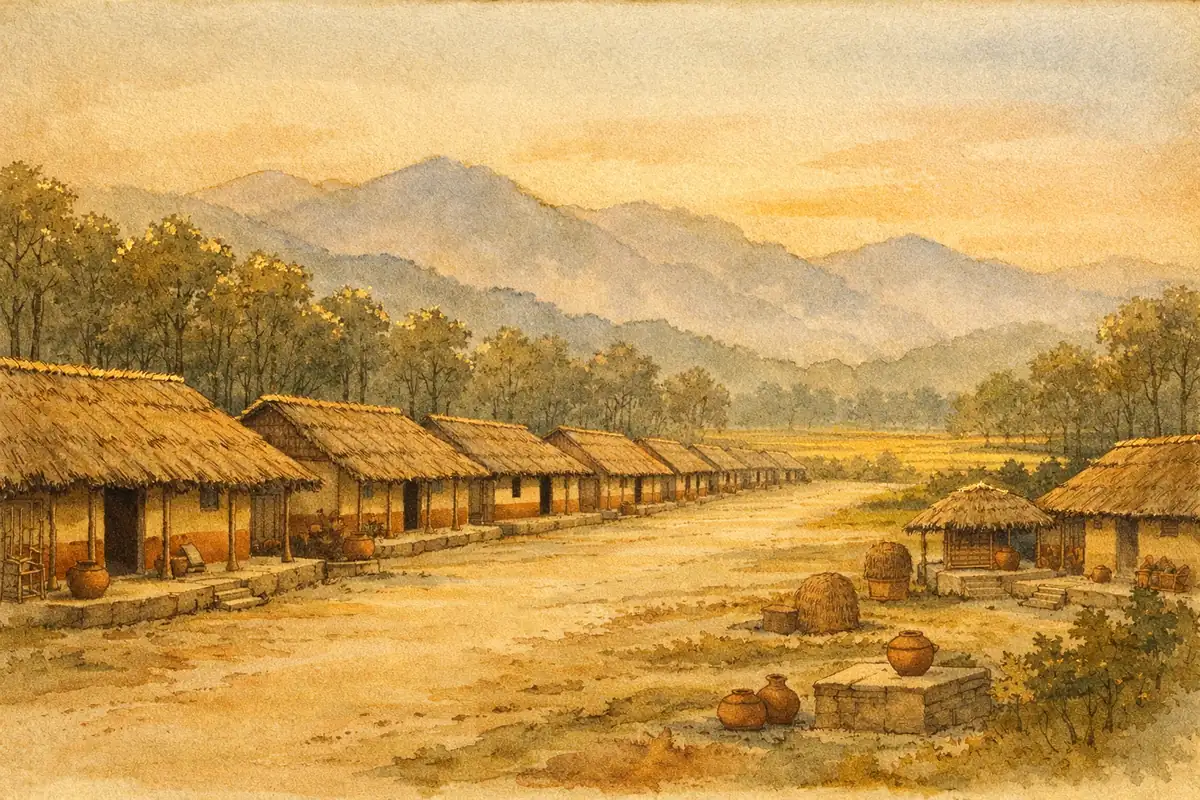
Crooke (1896) found the Buksas in three sections: the Eastern Buksas between the Ramganga and the Sarda, where the Tharu country begins; the Western Buksas of the Patli Dun and Bijnor; and a group between the Ganges and the Yamuna. The census of 1891 returned 1,907 Bhoksas and Mahras in the districts it listed. They farmed the Tarai, some hunted and fished, and some washed gold from the sands of the Sona Nadi; their villages in Bijnor were built along one wide, straight street kept very clean (Stewart, quoted by Crooke).
Faith and Worship
Crooke records that the Mahra Buksas employed Gaur Brahmans as priests at marriages and funerals, as did some of the Eastern Buksas. The Eastern Buksas paid special devotion to Bhawani or Devi and honoured two local saints, Sarwar Lakhi (Sakhi Sarwar) and Kalu Sayyid; some were Sikhs, and one of the Tarai parganas is named Nanakmatha after Guru Nanak. They had medicine men of their own.
Customs
Among the Mahra Buksas the sixth day after a birth is kept for Bihai, who makes children laugh or cry in their sleep, and the child's head is shaved after a month. At a wedding a booth (manro) is put up in the courtyard and the couple walk five times round the sacred fire. The dead are cremated, at the Ganges where possible; on each of the thirteen days of mourning a cake is given to a cow, and every year in Kuar the relatives of married daughters are feasted for the dead (Crooke).
Related communities
Sources
- W. Crooke, The Tribes and Castes of the North-Western Provinces and Oudh, vol. 2 (1896), 'Bhoksa, Bhuksa'. Vol. 2, 'Bhoksa, Bhuksa', pp. 55-61, quoting H. M. Elliot, J. L. Stewart and the census of 1891
- Wikipedia, 'Bhoksa people' (pointer, for the language; read 2026-11-07)
- Constitution (Scheduled Tribes) Order, 1950, and the companion orders, as amended: Parts for Uttarakhand, Uttar Pradesh (as compiled in Wikipedia's List of Scheduled Tribes)
- Census of India 2011, Table A-11: State Primary Census Abstract for individual Scheduled Tribes, Uttarakhand, Uttar Pradesh. censusindia.gov.in NADA catalog 42946 (Uttarakhand), 42948 (Uttar Pradesh)
- Ministry of Tribal Affairs list of 75 Particularly Vulnerable Tribal Groups (PIB release 1577166), as compiled in Wikipedia's 'Particularly vulnerable tribal group' (read 2026-11-07)
Practice differs by village and family. If something here does not match your family's tradition, trust your elders.