
Gurjar
गुर्जर
At a glance
- Clan word
- Gotra
- Descent
- Through the father
- Lives in
- Rajasthan, Uttar Pradesh, Haryana, Delhi, Madhya Pradesh, Punjab, Uttarakhand, Himachal Pradesh, Jammu and Kashmir, Pakistan
- Languages
- Gojri (Indo-European (Indo-Aryan)), Hindi (Indo-European (Indo-Aryan); Devanagari script), Punjabi (Indo-European (Indo-Aryan))
- Region
- North
About
Gurjar, also written Gujjar and Gujar, is a community of north and north-western India, Pakistan and Afghanistan, divided into many clans. Hindu Gurjars live mostly in settled villages in Rajasthan, Gujarat, Haryana, Madhya Pradesh, the Punjab plains and Maharashtra, and are in the Other Backward Classes in several states. In Jammu and Kashmir, Ladakh and parts of Himachal Pradesh, where many are Muslim and some families still move with their herds between the foothills and the mountain pastures, the Gujjars are a Scheduled Tribe.
Clans and Kinship
The clan is called a gotra. Crooke (1896) found that Gurjars spoke of eighty-four exogamous gotras, while the census returns of his day counted more than a thousand among Hindu Gurjars and several hundred among Muslim Gurjars; Hindu and Muslim Gurjars both keep clan names. In Bulandshahr a man would not marry within his own gotra or his mother's brother's, and the rule most generally kept was not to marry within one's own village. Descent is reckoned in the father's line. The Encyclopedia of World Cultures likewise describes hundreds of exogamous clans whose names come from founders or from places of early settlement.
What “Gotra” means
Gotra is the Gurjar clan, which Crooke also calls a section. A family does not marry within its own gotra, and in Crooke's Bulandshahr not within the mother's brother's either.
8 gotras
- Adhana
Bulandshahr and Meerut (Crooke 1896).
- Bhadana
Bulandshahr (Crooke 1896).
- Bhatti
Bulandshahr and Meerut (Crooke 1896); in the Upper Doab they claim descent from Bhatti Rajputs.
Bulandshahr and Meerut (Crooke 1896).
- Nagari
Bulandshahr and Meerut (Crooke 1896).
- Khatana
Saharanpur (Crooke 1896); also in Crooke's appended section lists.
- Gorsi
In Crooke's appended lists of Gujar sections (1896), also spelled Gursi.
- Chechi
In Crooke's appended lists of Gujar sections (1896).
A short list from William Crooke, The Tribes and Castes of the North-Western Provinces and Oudh, vol. 2 (1896): the five clans he names for Bulandshahr, in his order, then Khatana of Saharanpur and two names from the section lists appended to his article. Crooke's lists run to many more names and spellings differ between books; the site's gotra index spells Bhatti as Bhati and Nagari as Nagar.
In the Official Lists
Scheduled Tribe
Jammu and Kashmir, Ladakh, Himachal Pradesh
Listed as: Gujjar
Jammu and Kashmir and Ladakh: 'Gujjar and Bakarwal', listed in 1991. Himachal Pradesh: 'Gujjar', excluding the areas added to the state under section 5(1) of the Punjab Reorganisation Act, 1966, now the Kangra, Hamirpur, Kullu, Una, Shimla and Lahaul and Spiti districts.
The Scheduled Tribe entries were checked against Wikipedia's compilation of the Scheduled Tribes order, which may not show amendments of 2022 to 2024. In the plains states the Gurjars are in the Other Backward Classes: the sources opened say so for Rajasthan, Madhya Pradesh, Gujarat and Maharashtra (Dode and Dore Gurjars) without saying which list, so no OBC listing is shown here; the central (NCBC) list and each state's own list should be checked for the current entries.
Checked on 2026-11-06 against the sources below. The lists are amended from time to time and can differ by district; for a certificate, the current order or the state's list is what counts.
Name and Origin
How the Gurjars arose is argued among historians. William Crooke (1896) derived the name from the Sanskrit Gurjara and reported Alexander Cunningham's view that linked the Gurjars with the Kushans. The older view of a migration from Central Asia is now generally considered speculative, and several historians hold that Gurjara was first the name of a tribe or clan that became the name of a region and a people. This page takes no side.
History
The colonial surveys recorded Gurjar clans district by district. Crooke (1896) names the Adhana, Bhadana, Bhatti, Kasana and Nagari as the clans of most local importance in Bulandshahr, and the Khatana among those of Saharanpur, and says that most clan names are said to come from the titles of tribal leaders or from the villages of early settlement. The Gujjars and Bakarwals of Jammu and Kashmir were declared a Scheduled Tribe in 1991; in the 2011 census they were the most numerous Scheduled Tribe there, nearly all of them Muslim. The Van Gujjars of the Shivalik hills of Uttarakhand, who are Muslim, keep clans of their own like the Hindu gotras.
Faith and Worship
Gurjars are Hindu or Muslim, and a few are Sikh. Rajasthani Gurjars worship Surya, Devnarayan, Shiva and Bhavani, and sing the Devnarayan katha in the chant-like Gurjar goth; the Gujjars of Jammu and Kashmir are nearly all Muslim, as are the Van Gujjars of Uttarakhand.
Customs
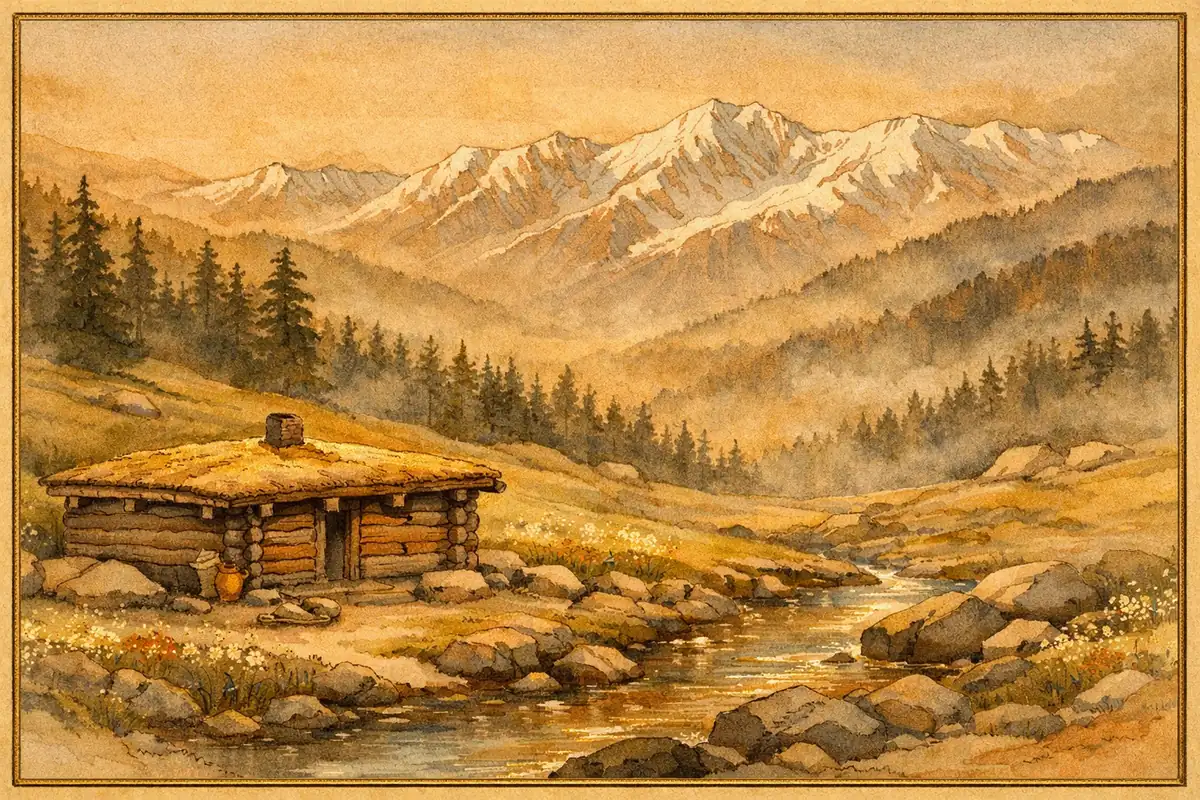
Gotra exogamy governs marriage, and Crooke recorded the further rule of not marrying within one's own village. In the hills some Gujjar families keep a seasonal round: the Van Gujjars winter in the Shivalik foothills and move to the alpine pastures in summer, and in Jammu and Kashmir families leave their seasonal homes in one season and return to them in the next.
Related communities
Sources
- William Crooke, The Tribes and Castes of the North-Western Provinces and Oudh, vol. 2 (1896), 'Gujar'. Vol. 2, pp. 439-453: name and origin; gotras and exogamy (pp. 442-443); appended section lists
- Jay DiMaggio, 'Gujar', Encyclopedia of World Cultures, vol. 3: South Asia
- Wikipedia, 'Gurjars' (pointer to the sources it cites; read 2026-11-06)
- Constitution (Scheduled Tribes) Order, 1950, and the Constitution (Jammu and Kashmir) Scheduled Tribes Order, 1989, as amended, Parts for Jammu and Kashmir, Ladakh and Himachal Pradesh (as compiled in Wikipedia's List of Scheduled Tribes)
Practice differs by village and family. If something here does not match your family's tradition, trust your elders.