
Mahar
महार
At a glance
- Clan word
- Kul
- Descent
- Through the father
- Lives in
- Maharashtra, Madhya Pradesh, Chhattisgarh, Karnataka
- Language
- Marathi (Indo-European (Indo-Aryan); Devanagari script)
- Region
- West
About
The Mahar are a Marathi-speaking community found largely in Maharashtra and the neighbouring states. The fourteenth-century poet-saint Chokhamela and B. R. Ambedkar were born into the community. Most Mahar families followed Ambedkar into Buddhism after his conversion at Nagpur in 1956, and in the 2011 census about 62 per cent of Mahars in Maharashtra gave Buddhism as their religion. They are a Scheduled Caste in Maharashtra and several other states.
Clans and Kinship
Descent is patrilineal (Zelliot). The community was once divided into endogamous regional sections, the potjat, which did not marry or eat together; Wikipedia, citing the Maharashtra State Gazetteer, names among them the Somvanshi, Ladvanshi, Bawane and Kosare. From the 1920s reformers worked to end these divisions, and Zelliot found them largely ignored. Within the community, families belong to exogamous kuls. In Wikipedia's account, citing the Census of India 1961 ethnographic notes, each kul once kept a devak, an emblem such as a tree, plant or animal that matters at the wedding, and families with the same devak do not marry; in most places the old devaks have given way to a devak of the leaves of five trees, the panchpalvi. Zelliot records that marriage with the mother's brother's daughter is allowed.
What “Kul” means
A kul is an exogamous clan. Each kul once kept a devak, an emblem honoured at the wedding, and families with the same devak do not marry.
No list is given here. Wikipedia prints a table of fourteen kuls with their devaks, citing the Census of India 1961 ethnographic notes for Andhra Pradesh; that table was not checked against its source for this page, and many of the names are surnames shared with other Marathi communities.
In the Official Lists
Scheduled Caste
Andhra Pradesh, Chhattisgarh, Dadra and Nagar Haveli and Daman and Diu, Goa, Gujarat, Karnataka, Madhya Pradesh, Maharashtra, Odisha, Rajasthan, Telangana, West Bengal
Listed as: Mahar
Maharashtra 'Mahar, Mehra, Taral, Dhegu Megu'; Gujarat, Karnataka and Rajasthan 'Mahar, Taral, Dhegu Megu'; Madhya Pradesh 'Mahar, Mehra, Mehar, Mahara'; Chhattisgarh 'Mahar, Mehra, Mehar'; Odisha 'Mehra, Mahar'; elsewhere 'Mahar'.
Checked against Wikipedia's compilation of the Scheduled Castes order, not against the ministry's own list; Wikipedia's Mahar article gives a slightly different list of states as of 2017, so check the current order. Wikipedia notes that Christian and Muslim Mahars are not counted as Scheduled Castes.
Checked on 2026-11-06 against the sources below. The lists are amended from time to time and can differ by district; for a certificate, the current order or the state's list is what counts.
Name and Origin
The meaning of the name is debated; Eleanor Zelliot lists explanations that include maha rashtra, 'the great country', and maha ari, 'great enemy'. Mahar tradition holds that the community are among the first inhabitants of Maharashtra, and Zelliot notes that their myths support the name bhumiputra, son of the soil.
History
The first Mahar known to history is Chokhamela, a fourteenth-century poet-saint of the Varkari tradition; members of his family, among them Karmamela, Banka, Nirmala and Soyarabai, are also remembered for their abhangs. Mahars served in the armies of the Deccan sultanates and, in the seventeenth century, of Shivaji. From about 1750 they joined the East India Company's Bombay Army in large numbers, until the British stopped recruiting them in the 1890s; the Mahar Regiment was raised in 1941. Under the village system of Maharashtra, Mahar families held a watan, a small grant of land and a share of the produce, tied to hereditary village duties; Shahu, ruler of Kolhapur, abolished the Mahar watan in his state in 1918. Former Mahar soldiers were the first to petition the government for equal treatment, and B. R. Ambedkar led the community's movement in the twentieth century; in 1956 at Nagpur he became a Buddhist, and most Mahars followed him. Marathi Dalit literature, which grew after the conversion, owes much to Mahar writers.
Faith and Worship
Most Mahar families have been Buddhist since 1956, when Ambedkar became a Buddhist at Nagpur and many of his followers did the same; in the 2011 census about 62 per cent of Mahars in Maharashtra were Buddhist, 38 per cent Hindu and a few Sikh (Wikipedia, citing the census). Zelliot describes the Buddhism Ambedkar taught as rational and egalitarian, with Theravada as its base. Before the conversion Mahar devotion centred on Shiva, Khandoba, Vithoba and the Varkari saints Chokhamela and Dnyaneshwar, and Hindu families still keep the Varkari pilgrimage to Pandharpur.
Customs
Buddhist families meet for worship in viharas, which also teach Pali and moral lessons to children (Zelliot). Song and the village theatre, tamasha, were long part of Mahar life, and since the conversion Marathi Dalit literature, much of it by Mahar writers, has grown into a school of its own.
Stories and Legends
The conversion at Nagpur
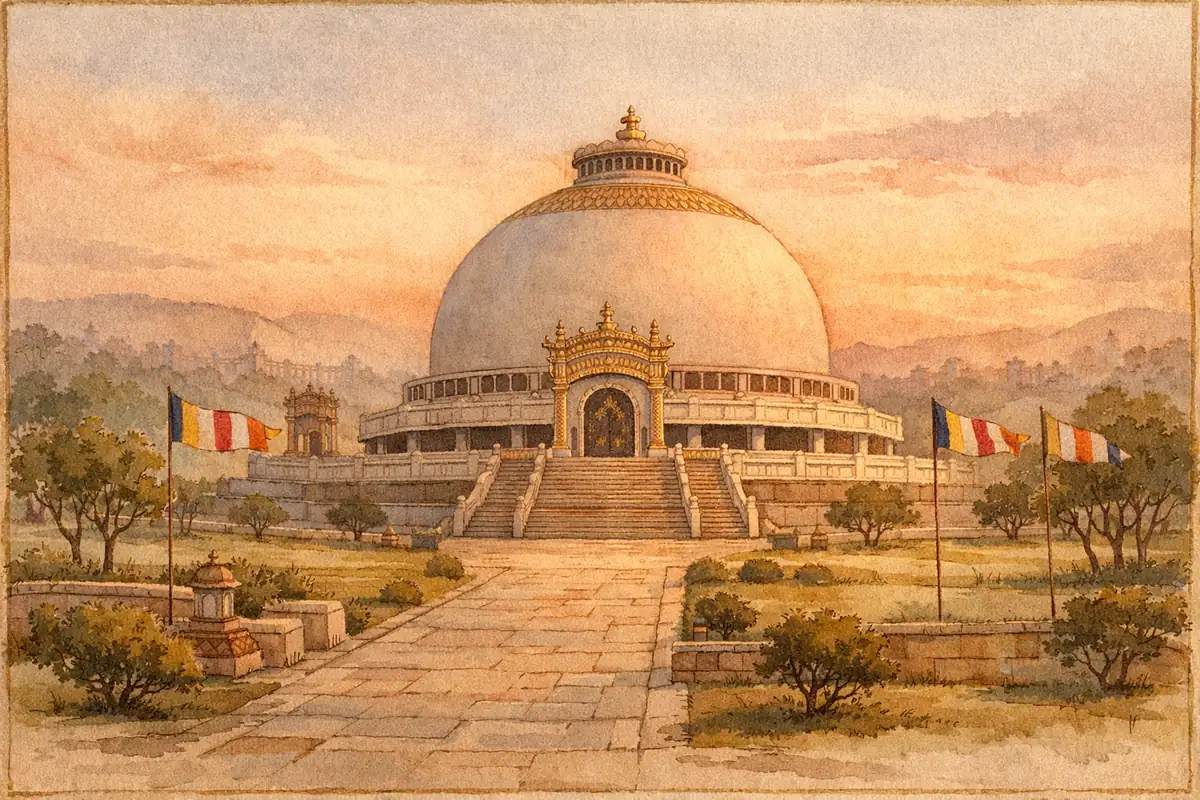
In 1956, at the ground in Nagpur now called Deekshabhoomi, Ambedkar became a Buddhist together with a great many of his followers, most of them Mahars, as a protest against caste discrimination. He died about two months later, and after his cremation still more Mahars became Buddhist.
Notable Personalities
Chokhamela
14th century
Varkari poet-saint, the first Mahar known to history (Zelliot), whose abhangs are still sung.
Soyarabai
14th century
A member of Chokhamela's family whose abhangs are remembered beside his (Wikipedia, Mahar).
B. R. Ambedkar
1891 to 1956
Chairman of the drafting committee of the Constitution of India and law minister in India's first cabinet, who led the movement against untouchability and the conversion to Buddhism; Paul Hockings and Eleanor Zelliot record that he was a Mahar.
Daya Pawar
20th century
Marathi writer of the Dalit literature movement, named by Zelliot among its best-known writers.
Namdeo Dhasal
20th century
Marathi poet of the Dalit literature movement, named by Zelliot among its best-known writers.
Related communities
Sources
- Eleanor Zelliot, 'Mahar', Encyclopedia of World Cultures, vol. 3: South Asia (Orientation, History, Kinship, Marriage, Religion)
- Paul Hockings, 'Neo-Buddhist', Encyclopedia of World Cultures, vol. 3: South Asia
- Wikipedia, 'Mahar' (pointer to the sources it cites, among them the Maharashtra State Gazetteer and the Census of India; read 2026-11-06)
- Constitution (Scheduled Castes) Order, 1950, as amended, Parts for the states listed (as compiled in Wikipedia's List of Scheduled Castes)
Practice differs by village and family. If something here does not match your family's tradition, trust your elders.