
Paite
At a glance
- Clan word
- Clan
- Descent
- Through the father
- Lives in
- Manipur, Mizoram, Myanmar
- Language
- Paite (Tibeto-Burman (Kuki-Chin))
- Region
- North-East
About
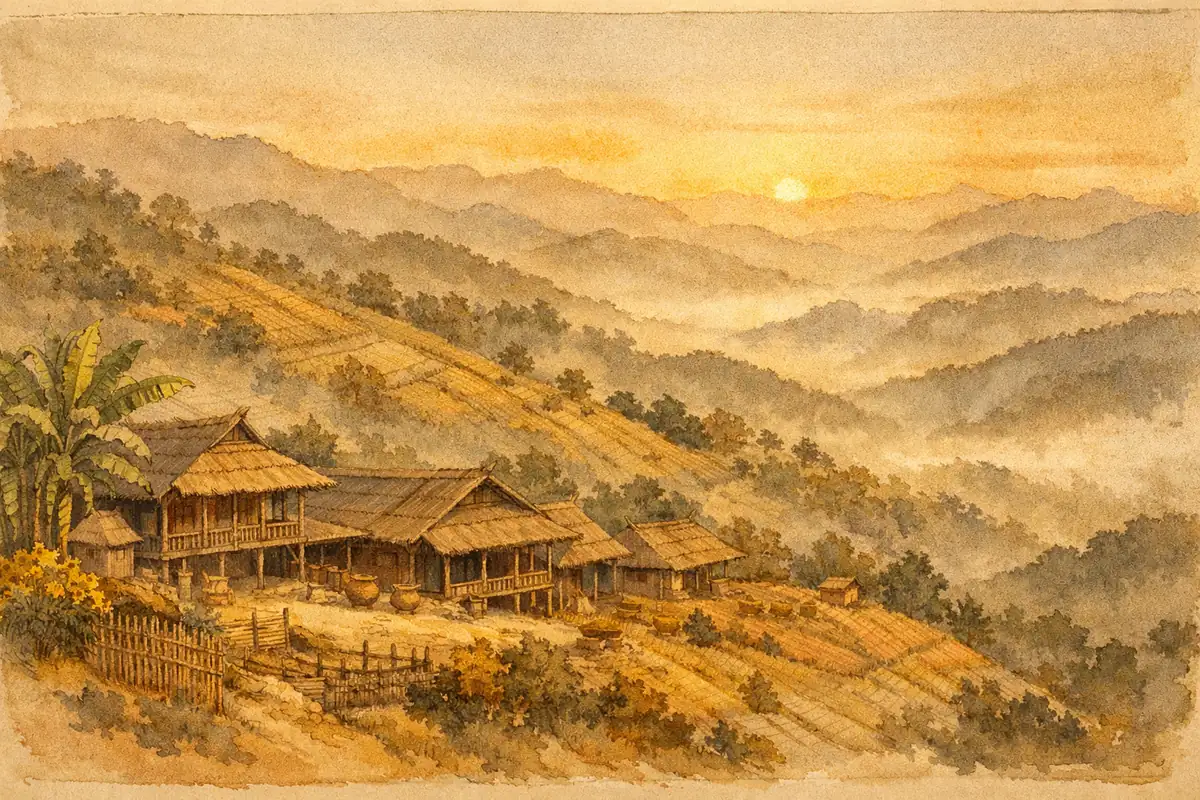
The Paite are a people of the hills of south-western Manipur, above all Churachandpur district, with villages also in Mizoram and in the Chin Hills of Myanmar. Shakespear (1912) recorded that the Lushai called them Paihte while they and the Manipuris more often said Vuite, and counted eleven of their villages, with 877 houses, in Manipur and two in the Lushai Hills. They are a Scheduled Tribe in Manipur and Mizoram, listed as Paite.
Clans and Kinship
Shakespear (1912, pp. 143-144) found the constitution of the clan and the village very like that of the Lushai, with villages under hereditary chiefs. In place of the Lushai bachelors' hall, the young men slept on long bunks on the front verandahs of the houses of men of standing, helped their host with his building and fields, and were given a feast of a pig by him once a year. The Vuite were monogamous, which set them apart from their neighbours, and marriage between paternal first cousins was allowed and among chiefs was the rule. The eldest son inherited.
What “Clan” means
Shakespear (1912) calls the Vuite a clan, as he does every people of the Lushai and Kuki hills, and gives no Paite word for the smaller descent groups. Descent is through the father.
1 clan
- Guite
The clan of the chiefs; older records often called the whole people by its name.
Shakespear (1912) gives no list of Vuite clans, only the line of the chiefs from Lamleia. Guite, the chiefs' clan, is named from the Wikipedia page on the Paite, which cites Carey and Tuck, The Chin Hills (1896); a fuller list needs a Paite or later source.
In the Official Lists
Scheduled Tribe
Manipur, Mizoram
An entry of its own in the lists of both states.
Checked on 2026-11-06 against the sources below. The lists are amended from time to time and can differ by district; for a certificate, the current order or the state's list is what counts.
Name and Origin
In the tradition Shakespear recorded (1912, pp. 142-143), Vuitea and Paihtea were the sons of Lamleia, who was hatched from an egg: of two eggs, one was tasted by Aichhana, a Thado, and thrown away as bitter, and the other was put in the rice bin, where Lamleia hatched. The Vuite chiefs of his day claimed descent from Lamleia through seventeen generations. The Thado told the story differently, and the Vuite did not accept their version. The first Vuite village is said to have been at Chimnuai, near Tiddim in the Chin Hills, and its name comes first in the Vuite sakhua chant. The name Paite, a later writer notes, was first used in the Lushai Hills; in the Chin Hills the same people were counted among the Tedim Chin.
History
Shakespear found the Vuite closely connected with the Sokte and Kamhau clans of the neighbouring Chin Hills, and Grierson placed their speech in the same group as those clans and the Thado. After living for a time near the Thangur chiefs of the Lushai Hills they moved north to the south-western hills of Manipur, where Shakespear counted eleven villages in 1912. The clan that provided their chiefs, the Guite, gave its name to the whole people in older records. J. Shakespear's The Lushei Kuki Clans (1912) is the main early account. Most Paite today are Christian.
Faith and Worship
Shakespear recorded that the Vuite acknowledged Pathian, the creator, and that their beliefs resembled those of the Lushai, except that they had no separate abode for the spirits of warriors and held that the dead live two or more lives in the land beyond the grave. Their household sacrifice (sakhua) was a boar killed on the front verandah and cooked in the house. Most Paite today are Christian.
Customs
In Shakespear's account a marriage began when the young man's parents took an offering of rice beer (zu) to the girl's house; if it was accepted she went to live with them, while the bridegroom slept for two or three months more with his bachelor friends. The marriage was not final, nor the price paid, until a child was born; once it was, the price agreed had to be paid in full and divorce was not countenanced. The Lushai kut festivals were not kept, but after the harvest the owners of the houses where the young men lodged killed one or two pigs. The title of Thangchhuah was won by giving three feasts: Buh ai, Sheshun and Chawn.
Related communities
Sources
- J. Shakespear, The Lushei Kuki Clans (London: Macmillan, 1912). Part II, ch. II, pp. 142-146 (the Vuite or Paihte)
- Constitution (Scheduled Tribes) Order, 1950, as amended, Parts for Manipur and Mizoram, as compiled from the Census of India list of notified Scheduled Tribes
- Paite people, Wikipedia (pointer: Churachandpur; Mizoram and Chin State; the Guite chiefs' clan, citing Carey and Tuck 1896; the name Paite first used in the Lushai Hills, citing Kamkhenthang, The Paite, 1988; Christianity)
Practice differs by village and family. If something here does not match your family's tradition, trust your elders.