
Ravidassia
ਰਵਿਦਾਸੀਆ
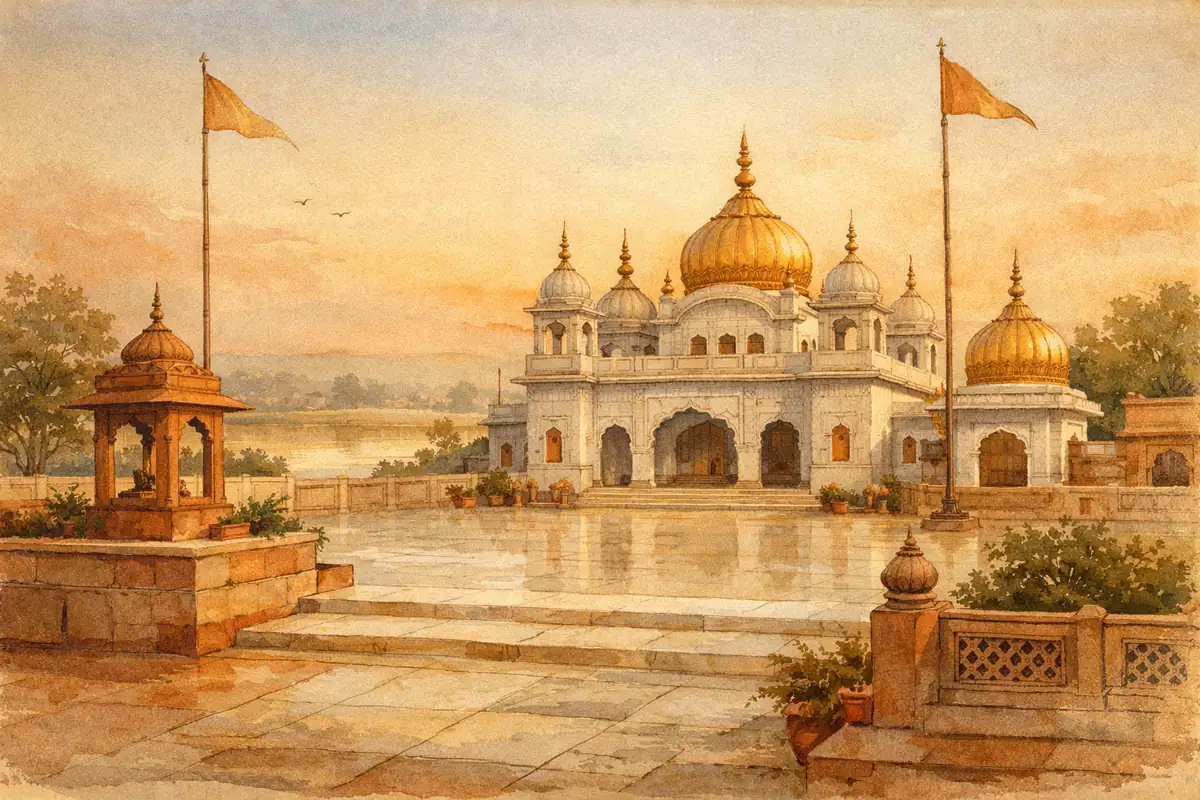
At a glance
- Clan word
- Got
- Descent
- Not recorded in the sources used
- Lives in
- Punjab, Haryana, Himachal Pradesh, United Kingdom, Canada
- Language
- Punjabi (Indo-European (Indo-Aryan); Gurmukhi script)
- Region
- North
About
Ravidassia is the name taken by followers of Guru Ravidass in Punjab, most of them from a community whose Sikh families are known as Ramdasia and whose members built the Ad Dharm movement in the 1920s. Ravidassia is the usual name in the Doaba region, Ramdasia in Puadh and Malwa. There are large communities in Britain, Canada and elsewhere. Since 2010 many follow the Ravidassia religion, centred on the Amritbani of Guru Ravidass.
Clans and Kinship
Rose's Glossary (1911), writing under an older name for the Punjab community from which most Ravidassia families come, records that its gots, or sections, were very numerous and some of them large, with some found mainly in the central and eastern districts and others in the Jullundur division. In the eastern Punjab it found several sub-castes that did not marry each other, one of them, the Raidasi, named after Guru Ravidass and the main one around Karnal; in Jind the Ramdasias formed a sub-caste of their own with nine gots. The Glossary does not set out the rules of marriage between gots or say how descent is reckoned. Today the community takes in families who follow the Ravidassia religion, Sikh families known as Ramdasia, some of whom keep the Guru Granth Sahib and the five articles of faith, and families who keep Hindu practice. Local life gathers round Guru Ravidass temples and the deras of Ravidassia saints, whose living sants many accept as guru.
What “Got” means
Got is the Punjabi word for a clan, and the word Rose's Glossary (1911) uses, with 'section', for the clans of the Punjab families from whom most Ravidassia families come.
No list is given. Rose's Glossary (1911, vol. 2, p. 150) names thirteen gots of the Punjab community from which most Ravidassia families come, but most are names shared with the gots and surnames of other Punjabi communities, and a got name alone says nothing about a family's community, so they are not reproduced here.
In the Official Lists
Scheduled Caste
Punjab, Haryana, Himachal Pradesh, Chandigarh, Delhi, Jammu and Kashmir
Listed as: Ravidasia, Ramdasia, Ad Dharmi
Punjab, Haryana, Himachal Pradesh and Chandigarh list Ad Dharmi as its own entry. Ramdasi, Ravidasi and Ramdasia, and in Punjab also Ramdasia Sikh, Ravidasia and Ravidasia Sikh, are part of a combined entry that also carries an older name; Chandigarh's has 'Ramdasi or Ravidasi', Delhi's Ramdasia, Ravidasi and Raidasi, and Jammu and Kashmir's Ramdasia (Census 2011, Table A-10 Appendix).
Checked in Census 2011 Table A-10 Appendix for the six states and union territories, and against Wikipedia's compilation of the Scheduled Castes order. In 2011, 1,017,192 people in Punjab were recorded under the Ad Dharmi entry; other Ravidassia families are counted in the combined entries, which cannot be separated, so no population is given. Entries naming Ravidas or Ramdasia in other states (Rajasthan, Gujarat, Bihar, Odisha, West Bengal, Manipur and others) are not shown, as whether they name this community was not checked.
Checked on 2026-11-07 against the sources below. The lists are amended from time to time and can differ by district; for a certificate, the current order or the state's list is what counts.
Name and Origin
The name comes from Guru Ravidass, the medieval saint-poet of Varanasi whom the community regards as its guru, and whose birthplace at Seer Goverdhanpur in Varanasi it holds sacred. Ramdasia is the name used for the community's Sikh families, and the two names are often used interchangeably; Rose's Glossary (1914) notes that the two were already hard to tell apart in the census of its day.
History
Ravidass's hymns are in the Guru Granth Sahib, and the community long revered that scripture for them. Between 1920 and 1925 the Ad Dharm movement took shape in Punjab; among its founders was Mangu Ram Mugowalia, a founding member of the Ghadar Party who had been educated in the United States. It held that the community were the original people of India with a religion of their own, compiled its own holy book, the Ad Prakash, and in the 1931 census 418,789 people in Punjab recorded themselves as Ad Dharmi. Deras of Ravidassia saints, above all Dera Sachkhand Ballan in Punjab, spread the movement; construction of the Shri Guru Ravidass Janam Asthan temple at Seer Goverdhanpur began on 14 June 1965 under the dera's second guru, Sant Sarwan Dass. On 29 January 2010 Dera Sachkhand Ballan announced the Ravidassia religion, with its own scripture, the Amritbani Guru Ravidass Ji, its own symbol, Har, and its own motto, Jai Gurdev. Families who settled in Britain, Canada and elsewhere have built Guru Ravidass temples there.
Faith and Worship
Many families follow the Ravidassia religion, announced in 2010, whose scripture is the Amritbani Guru Ravidass Ji, with 240 hymns of Ravidass, and whose places of worship are Guru Ravidass temples. Others are Sikhs, the Ramdasia, who keep the Guru Granth Sahib; others keep Hindu practice. Guru Ravidass is revered as guru, and the living sants of the deras are accepted as guru by many.
Customs
Guru Ravidass's birthday in January or February is the main day of the year, kept with a great gathering at the Janam Asthan temple at Seer Goverdhanpur in Varanasi, to which a pilgrim train has run from Jalandhar since 2000. The Ravidassia greeting is Jai Gurdev, and the symbol Har marks temples and flags.
Festivals
Guru Ravidass Jayanti
January or February
Guru Ravidass's birthday, kept with a large gathering at the Janam Asthan temple at Seer Goverdhanpur in Varanasi.
Stories and Legends
Begampura
Ravidass sang of Begampura, an ideal city. The community's deras took it up as the aim of their mission: when Dera Sachkhand Ballan sent a mission to Varanasi to found a centre at his birthplace, it was to realise Begampura, a place where all are accepted and none are shut out, and the Janam Asthan temple built there from 1965 is also called Begampura.
Notable Personalities
Mangu Ram Mugowalia
1886 to 1980
A founding member of the Ghadar Party who became one of the founders of the Ad Dharm movement in Punjab in the 1920s.
Related communities
Sources
- H. A. Rose (from Ibbetson and Maclagan), A Glossary of the Tribes and Castes of the Punjab and North-West Frontier Province, vol. 2 (1911), the entry under an older name: groups and gots. Vol. 2, pp. 148-150
- H. A. Rose, A Glossary of the Tribes and Castes of the Punjab and North-West Frontier Province, vol. 3 (1914), entries 'Ramdasi' and 'Ramdasia'. Vol. 3, pp. 306-307
- Census of India 2011, Table A-10 Appendix: District wise scheduled caste population, Punjab (also the tables for Haryana, Himachal Pradesh, Chandigarh, NCT of Delhi and Jammu and Kashmir, catalog 42887, 42883, 42885, 42888, 42882)
- Wikipedia, 'Ravidassia' (pointer to the sources it cites, among them Ronki Ram; read 2026-11-06 and 2026-11-07)
- Wikipedia, 'Ad-Dharmi' (pointer to the sources it cites, among them Juergensmeyer)
- Wikipedia, 'Mangu Ram Mugowalia' (life dates, 14 January 1886 to 22 April 1980; read 2026-11-07)
- Constitution (Scheduled Castes) Order, 1950, as amended, Parts for Punjab, Haryana, Himachal Pradesh, Chandigarh, Delhi and Jammu and Kashmir (as compiled in Wikipedia's List of Scheduled Castes)
Practice differs by village and family. If something here does not match your family's tradition, trust your elders.