
Soliga
ಸೋಲಿಗ
At a glance
- Clan word
- Kula
- Descent
- Not recorded in the sources used
- Lives in
- Karnataka, Tamil Nadu
- Language
- Sholaga (Dravidian)
- Population
- 39,836 Census 2011, Table A-11: Soligaru (33,819) and Sholaga (52) in Karnataka, and Sholaga in Tamil Nadu (5,965)
- Region
- South
About
The Soliga, also written Sholaga, are a forest people of the hills where Karnataka meets Tamil Nadu; Thurston (1909) found them in the jungles between Dimbhum and Kollegal on the Mysore frontier. Buchanan heard them speak an old form of Kannada. They lived on ragi and yams, wild game, honey and the forest produce they collected, and are divided into exogamous clans called kula. They are a Scheduled Tribe in Karnataka and Tamil Nadu.
Clans and Kinship
Thurston records that the Sholagas call themselves men of five kulams, exogamous septs, among them Chalikiri, Teneru, Belleri, Surya and Aleru. Among those of the 'twelve kulam' class everything was done by twelves: twelve elders blessed a child on the twelfth day, twelve of the groom's relatives fetched the bride, the wedding booth had twelve posts and mourning lasted twelve days. Disputes were settled by the Yejamana, assisted by the Pattagara and leading men, with a village servant, the Chalavathi, and these three offices belonged to the Chalikiri, Teneru and Surya septs. Each sept has its own burial ground, the gopamane.
What “Kula” means
Kula (Thurston's kulam) is the Soliga exogamous clan: a person marries outside his or her own kula.
5 kulas
- Chalikiri
The Yejamana, who settles disputes, belongs to this kula.
- Teneru
Also Teneri; the Pattagara belongs to this kula.
- Belleri
- Surya
Totem: the sun
The Chalavathi, the village servant, belongs to this kula.
- Aleru
The five kulams in Thurston's order (Castes and Tribes of Southern India, vol. 6, 1909, 'Sholaga'). He says the five are 'among' the Sholaga septs, so the list may not be complete, and later writers spell some names differently.
In the Official Lists
Scheduled Tribe
Karnataka, Tamil Nadu
Listed as: Sholaga
Karnataka lists 'Sholaga' and 'Soligaru' as two entries; Tamil Nadu lists 'Sholaga'.
Checked against the Census 2011 tables and Wikipedia's compilation of the order. The Soliga are not a PVTG.
Checked on 2026-11-07 against the sources below. The lists are amended from time to time and can differ by district; for a certificate, the current order or the state's list is what counts.
Name and Origin
Thurston (1909) records a tradition that two brothers, Karayan and Madheswara, lived in the Geddesala hills. The Sholagas and Uralis descend from Karayan, and the Sivacharis (Lingayats) from Madheswara, who escaped a demon's service with the help of the god Krishnamurti, fled from his angry brother across the hills and was at last forgiven on condition that Karayan should have the first claim to all offerings. Thurston adds that in his day Sivacharis still made their offerings first to Karayan and then to Madheswara.
History
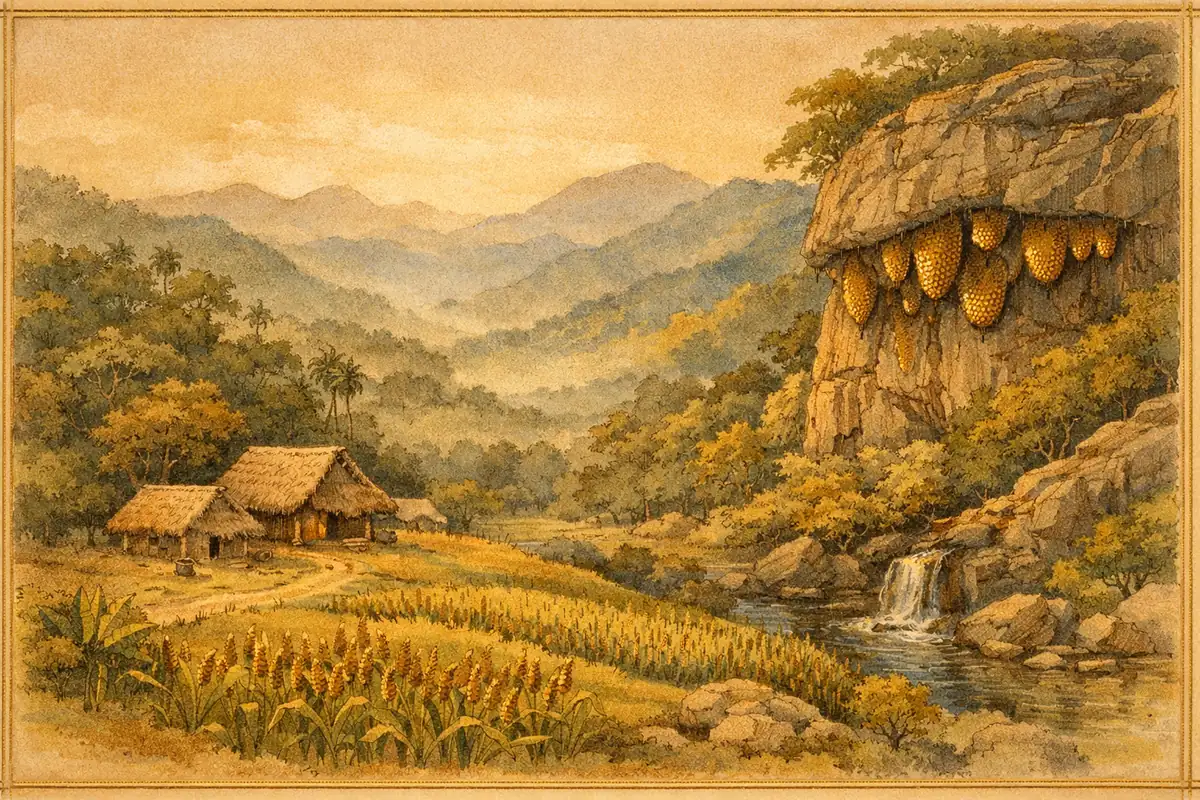
Francis Buchanan, early in the nineteenth century, described the Sholagas living on the mountain tops and speaking an old dialect of Kannada (quoted by Thurston). By Thurston's time they were the main collectors of the minor forest produce of the Coimbatore forests, myrobalans, barks, gum, honey, soap-nuts and deer's horn, which they brought to forest depots to be sorted and paid for, and they gathered the large combs of rock bees from cliffs and crevices.
Faith and Worship
The Soliga origin story, as Thurston recorded it, ties them to the hill cult of Madheswara and to his brother Karayan, from whom they descend; anyone climbing Kotriboli hill was expected to place a stone on the rock there. The Sholagas regard parakeets as their children and will not eat them, and after a burial they set up a stone for the dead person in the burial ground of the sept.
Customs
At puberty a girl stays five days in a separate hut, and her maternal uncle gives her a new cloth. At a wedding the groom ties the tali inside a booth; sometimes a couple live together without a ceremony and give a feast later. The dead are buried lying on the left side with the head to the south. On the fourth day a goat is offered, and the son goes to the grave with men of each sept, carrying a stone; after a meal eaten from leaves laid out one for each sept, he sets the stone up in his sept's burial ground (Thurston).
Stories and Legends
Karayan and Madheswara
In the tradition Thurston recorded, the brothers Karayan and Madheswara fell into the hands of the demon Savanan. With the god Krishnamurti's help Madheswara made him shoes of wax and led him onto a rock heated by a great fire, where the demon fell and was crushed. Karayan, who had been herding Savanan's cattle, was angry and chased his brother from hill to hill, until Madheswara gave himself up and agreed that Karayan should always have the first share of offerings.
Related communities
Sources
- E. Thurston and K. Rangachari, Castes and Tribes of Southern India, vol. 6 (1909), 'Sholaga'. Vol. 6, 'Sholaga', pp. 379-385
- Constitution (Scheduled Tribes) Order, 1950, and the companion orders, as amended: Parts for Karnataka, Tamil Nadu (as compiled in Wikipedia's List of Scheduled Tribes)
- Census of India 2011, Table A-11: State Primary Census Abstract for individual Scheduled Tribes, Karnataka, Tamil Nadu. censusindia.gov.in NADA catalog 42968 (Karnataka), 42972 (Tamil Nadu)
Practice differs by village and family. If something here does not match your family's tradition, trust your elders.