
Asur
At a glance
- Clan word
- Clan
- Descent
- Not recorded in the sources used
- Lives in
- Jharkhand, Bihar, West Bengal, Chhattisgarh
- Language
- Asuri (Austroasiatic (Munda))
- Population
- 30,452 Census 2011, Table A-11, Asur entries added together: Jharkhand ('Asur, Agaria') 22,459; Bihar ('Asur, Agaria') 4,129; West Bengal 3,864.
- Part of
- Munda
- Region
- East
About
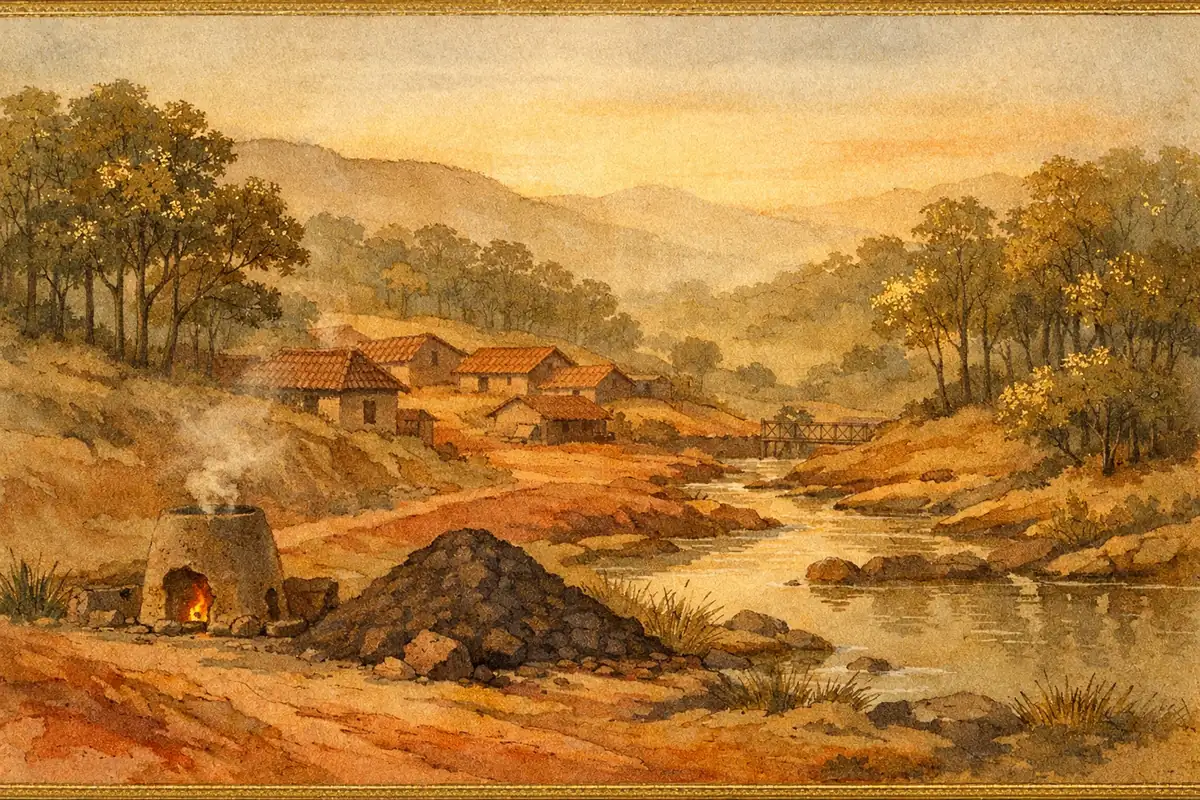
The Asur are a small Munda-speaking people of the western hills of the Chota Nagpur plateau in Jharkhand, with others in Bihar and West Bengal. Risley (1891) knew them as iron-smelters of Lohardaga and eastern Sarguja, and in Munda tradition, as Roy (1912) collected it, the Asuras worked iron in the country before the Mundas came. They are a Scheduled Tribe in Jharkhand, Bihar and West Bengal, and a particularly vulnerable tribal group (PVTG) in Jharkhand and Bihar; the 2011 census counted 30,452.
Clans and Kinship
Risley (1891) recorded thirteen totemic septs. A man may not marry a woman of his own sept, and may not eat, cut or injure the plant or animal whose name his sept bears. Two septs, Basriar (bamboo) and Mukruar (spider), also occur among the Kurmi. He gives majhi and parja as titles. Adult marriage was usual in his time, though some families were taking up infant marriage, and polygamy was allowed. The sources used for this page do not describe Asur village institutions or say how descent is traced.
What “Clan” means
Risley (1891) calls the Asur exogamous divisions totemistic sections or septs and gives no Asur word for them; the sources used here do not record one.
13 clans
- Aind
Totem: eel
- Baroa
Totem: wild cat
- Basriar
Totem: bamboo
- Beliar
Totem: bel fruit
- Kachua
Totem: tortoise
- Kaithawar
Totem: kaitha fruit
- Kerketa
Totem: a bird
- Mukruar
Totem: spider
- Nag
Totem: snake
- Rote
Totem: frog
- Siar
Totem: jackal
- Tirki
Totem: a bird
- Topo
Totem: a bird
The thirteen septs Risley lists for the Asur (1891, vol. II, Appendix I, p. 2), in his order, with his glosses. One of the two scans drops Kerketa; the other has all thirteen.
In the Official Lists
Scheduled Tribe
Jharkhand, Bihar, West Bengal
Listed as: Asur
Entered as 'Asur, Agaria' in Jharkhand and Bihar (Census 2011 tables). In Chhattisgarh, Madhya Pradesh and Maharashtra, Asur is one of the names within the Gond entry.
Checked against the 2011 census table of each state and Wikipedia's compilation of the order; amendments after 2011 were not checked. The PVTG list reproduced from the 2019 PIB release names the Asur for Bihar and Jharkhand.
Checked on 2026-11-07 against the sources below. The lists are amended from time to time and can differ by district; for a certificate, the current order or the state's list is what counts.
Name and Origin
Roy (1912) records that the Asuras, whom he calls kinsmen of the Mundas, name Dhaulagir and Mainagir as the hills where they once lived. He read the Munda legend of Lutkum Haram and Lutkum Buria as the memory of a struggle in which the iron-smelting Asuras were worsted and withdrew to the far west of the Ranchi district. Risley (1891) noted that Dalton linked the tribe with the Asuras whom, in Munda tradition, Sing Bonga destroyed, while Jellinghaus thought the legend referred instead to an older people of miners and temple-builders. These are scholars' readings of legends.
History
In the counts of 1872 and 1881 that Risley (1891) gives, there were only a few thousand Asuras, in Lohardaga, Hazaribagh, Manbhum, the Santal Parganas and the Tributary States, and he described them as living almost entirely by smelting iron. His appendix lists the Agaria, Birjia, Kolh-Asur, Lohra-Asur and Paharia-Asur as sub-tribes. The 2011 census enters the Asur together with the Agaria in Jharkhand and Bihar, and they are among the PVTGs of both states.
Faith and Worship
Risley (1891) wrote that little was known of Asur religion: they worshipped Sing Bonga, the supreme deity of most Munda-speaking tribes, did not know Marang Buru by that name, and worshipped the great hills near them under other names.
Deities named in the sources: Sing Bonga
Customs
Risley (1891) records that the Asur married outside the sept, usually as adults, that polygamy was allowed, and that divorce was easy. The sources used for this page say little more about Asur rites of passage.
Related communities
Sources
- H. H. Risley, The Tribes and Castes of Bengal: Ethnographic Glossary, vol. I (Calcutta, 1891). s.v. Asura, p. 25
- H. H. Risley, The Tribes and Castes of Bengal: Ethnographic Glossary, vol. II (Calcutta, 1891). Appendix I, p. 2 (Asura sub-tribes, titles and septs). Second scan read: https://archive.org/details/tribes-and-castes-of-bengal-volume-2
- Sarat Chandra Roy, The Mundas and Their Country (Calcutta, 1912). Pp. 9-10 (Asuri among the Munda languages); pp. 21-22 (Asura tradition of Dhaulagir and Mainagir); pp. 60-61 (the Asuras in Munda legend)
- Census of India 2011, Table A-11: State Primary Census Abstract for individual Scheduled Tribes (one table for each state). Jharkhand (catalog 42959); Bihar (catalog 42949); West Bengal (catalog 42958)
- Constitution (Scheduled Tribes) Order, 1950, as amended, Parts for Jharkhand, Bihar and West Bengal, as compiled in Wikipedia's List of Scheduled Tribes from the Census of India list of notified Scheduled Tribes
- Particularly vulnerable tribal group, Wikipedia (pointer only: the PVTG list from the PIB release 'Welfare of particularly vulnerable Tribal groups', 2019)
Practice differs by village and family. If something here does not match your family's tradition, trust your elders.