
Mahali
At a glance
- Clan word
- Killi
- Descent
- Through the father
- Lives in
- West Bengal, Jharkhand, Odisha, Bihar
- Languages
- Mahali (Austroasiatic (Munda)), Santali (Austroasiatic (Munda)), Bengali, Hindi and Odia (Indo-European (Indo-Aryan))
- Population
- 2,59,623 Census 2011, Table A-11, Mahali and Mahli entries added together: Jharkhand ('Mahli') 152,663; West Bengal ('Mahali') 81,594 and ('Mahli') 2,609; Odisha ('Mahali') 18,625; Bihar ('Mahli') 4,132. The 'Munda Mahalis' within Odisha's Munda entry cannot be separated and are not included.
- Part of
- Munda
- Region
- East
About
The Mahali, also written Mahli, are a people of West Bengal, Jharkhand and northern Odisha, many of them known for fine bamboo work. Risley (1891) recorded five divisions and thought most Mahalis had branched off from the Santal, and the Mahali Munda from the Munda; SCSTRTI (2013) gives the same account. Their exogamous totemic clans are called killi, and the whole community treats the pig as a totem. They are a Scheduled Tribe in West Bengal, Jharkhand, Odisha and Bihar; the 2011 census counted 259,623.
Clans and Kinship
Risley (1891) recorded five divisions: Bansphor Mahali, who did bamboo work; Patar Mahali, basket-makers and cultivators; Sulunkhi Mahali, cultivators and labourers; Tanti Mahali, palanquin-bearers; and the Mahali Munda, a small group in Lohardaga. SCSTRTI (2013) still describes these five endogamous sections. Each is divided into exogamous totemic clans (killi). A man may not marry in his own clan or, in Risley's account, his mother's, and members may not kill or eat the clan totem; village exogamy is also followed. Descent, residence and inheritance are through the father, sons share equally, and the eldest son keeps the rites for the ancestors. The village council is made up of the naya (priest), the majhi (headman), the gadeat (messenger) and the elders.
What “Killi” means
SCSTRTI (2013) calls the Mahali exogamous totemic clan a killi; Risley (1891) wrote 'section'. A clan's totem may not be killed or eaten, and marriage within the clan is forbidden.
36 killis
- Chardhagia
sections in Risley (1891)
- Chardhiar
sections in Risley (1891)
- Charhar
Totem: a tree · sections in Risley (1891)
SCSTRTI (2013) writes Charbar.
- Dhilki
sections in Risley (1891)
- Dumriar
Totem: wild fig · sections in Risley (1891)
Also Dungri.
- Goondli
Totem: a kind of grain · sections in Risley (1891)
Members may not eat it.
- Hansda
Totem: wild goose · sections in Risley (1891)
Also Hasdagiar.
- Hemron
sections in Risley (1891)
- Induar
Totem: a kind of eel · sections in Risley (1891)
- Kantuar
Totem: ear · sections in Risley (1891)
Also Kanti; members may not eat the ear of any animal.
- Karkusa
sections in Risley (1891)
- Khangar
sections in Risley (1891)
- Khariar
sections in Risley (1891)
- Kathargach
Totem: jack-fruit tree · sections in Risley (1891)
- Kerketa
Totem: a kind of bird · sections in Risley (1891)
- Kundiar
sections in Risley (1891)
- Mahukal
Totem: a bird, its long tail · sections in Risley (1891)
- Mandriar
sections in Risley (1891)
- Marri
sections in Risley (1891)
Risley notes that members do not let their married daughters enter their houses.
- Murmuar
Totem: nilgai · sections in Risley (1891)
- Patariar
sections in Risley (1891)
- Pilua
Totem: a caterpillar · sections in Risley (1891)
- Rondiar
sections in Risley (1891)
- Sarihin
sections in Risley (1891)
- Silli
sections in Risley (1891)
- Tapaer
Totem: a bird · sections in Risley (1891)
- Taw
sections in Risley (1891)
- Tirki
Totem: bull · sections in Risley (1891)
- Tunduar
sections in Risley (1891)
- Turu
Totem: grass, cotton, fruit or seed · sections in Risley (1891)
Risley's gloss.
- Tutiear
sections in Risley (1891)
- Bhuktuar
sections of the Mahali Munda (Risley 1891)
- Lang Chenre
sections of the Mahali Munda (Risley 1891)
- Sanga
sections of the Mahali Munda (Risley 1891)
- Duagri
Totem: wild pig · killi named by SCSTRTI (2013)
- Topowar
Totem: a bird · killi named by SCSTRTI (2013)
The first thirty-one are the sections Risley lists for the Mahali (1891, vol. II, Appendix I, pp. 96-97) in his order, with his glosses and notes, then the three he gives for the Mahali Munda. The last two are killi that SCSTRTI (2013) names and Risley does not; its other examples (Charbar, Kathar gach, Kerketta, Murumar, Tirki) match his list.
In the Official Lists
Scheduled Tribe
West Bengal, Jharkhand, Odisha, Bihar
Listed as: Mahali
Entered as 'Mahali' in West Bengal and Odisha and as 'Mahli' in Jharkhand and Bihar; West Bengal also has a separate entry 'Mahli', and Odisha's Munda entry includes 'Munda Mahalis' (Census 2011 tables).
Checked against the 2011 census table of each state and Wikipedia's compilation of the order; amendments after 2011 were not checked.
Checked on 2026-11-07 against the sources below. The lists are amended from time to time and can differ by district; for a certificate, the current order or the state's list is what counts.
Name and Origin
SCSTRTI's handbook (2013) derives the name from mat, the Santali word for bamboo. Risley (1891) compared the Mahali section names with those of the Santal and concluded that the main body of the Mahali, the Bansphor, Sulunkhi and Tanti groups, was a branch of the Santal that had separated not long before, and that the Mahali Munda had parted in the same way from the Munda. The Mahali of Odisha say they came from Bihar and Bengal and settled first near the Odisha border (SCSTRTI).
History
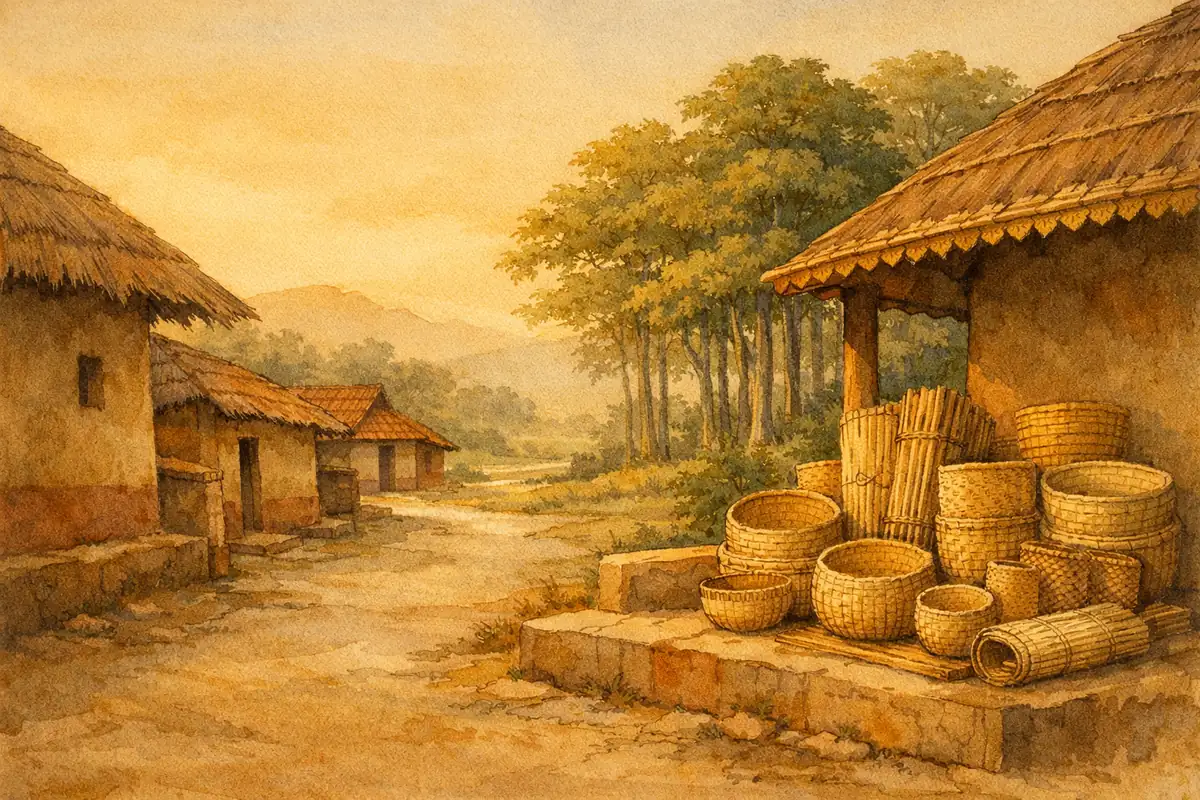
Risley (1891) described the Mahali of Chota Nagpur and western Bengal as basket-makers and bamboo workers, palanquin-bearers, cultivators and labourers, and recorded a headman, the parganait, and a council that settled their disputes. In Odisha SCSTRTI (2013) found them mainly in Mayurbhanj and Sundargarh, living in their own hamlets in villages shared with other communities. Men and women make baskets of many sizes, fences, fish traps and brooms, sold in local markets, and some farm or work for wages; Mahali artisans demonstrate the craft at SCSTRTI's tribal museum in Bhubaneswar.
Faith and Worship
Risley (1891) named Barpahari, the mountain god known also to the Munda and Santal, and Manasa, the snake goddess, as the deities the Mahali then chiefly worshipped, with goats, fowls, rice and ghee. SCSTRTI (2013) records that the Mahali of Odisha, like the Santal, hold Marang Buru as their supreme deity, and also worship Bana Kuanri, Manreiko Tureiko, Babaji, Bad Chandi and Rang Chandi, several of whom live in the sacred sal grove (jahirsthan) outside the village. Ancestors are worshipped, and the naya is the village priest.
Deities named in the sources: Marang Buru
Customs
In Risley's account the bride-price was small; on the wedding morning the groom was married to a mango tree and the bride to a mahua, and at the bride's house the groom marked her forehead five times with vermilion and gave her an iron armlet. A widow could remarry, preferably her late husband's younger brother. Some Mahali buried their dead and others cremated them, with offerings to ancestors in Kartik and Chait. SCSTRTI (2013) records nine days of birth pollution, after which the naya names the child by grain divination; the tribal council can expel anyone who marries within the clan.
Festivals
Baha
Phalgun (February-March)
The naya, the village priest, performs the worship for the welfare of the village (SCSTRTI).
Sharai
Kartik (October-November)
The naya sacrifices fowls at the edge of the village (SCSTRTI).
Maa-mane
Magh (January-February)
A rite before using the new fruits and leaves, thatching grass and wood of the year (SCSTRTI).
Related communities
Sources
- H. H. Risley, The Tribes and Castes of Bengal: Ethnographic Glossary, vol. II (Calcutta, 1891). s.v. Mahili, pp. 40-43; Appendix I, pp. 96-97 (sub-castes and sections). Second scan read: https://archive.org/details/tribes-and-castes-of-bengal-volume-2
- SCSTRTI Odisha, Mahali (photo handbook, Bhubaneswar, 2013), from the Ministry of Tribal Affairs repository. Introduction, social organization, life cycle
- SCSTRTI Odisha, tribe profile: Mahali. Scheduled Castes and Scheduled Tribes Research and Training Institute, Bhubaneswar; read 7 November 2026
- Census of India 2011, Table A-11: State Primary Census Abstract for individual Scheduled Tribes (one table for each state). Jharkhand (catalog 42959); West Bengal (catalog 42958); Odisha (catalog 42960); Bihar (catalog 42949)
- Constitution (Scheduled Tribes) Order, 1950, as amended, Parts for West Bengal, Jharkhand, Odisha and Bihar, as compiled in Wikipedia's List of Scheduled Tribes from the Census of India list of notified Scheduled Tribes
Practice differs by village and family. If something here does not match your family's tradition, trust your elders.