
Yanadi
యానాది
At a glance
- Clan word
- House name
- Descent
- Not recorded in the sources used
- Lives in
- Andhra Pradesh, Telangana
- Language
- Telugu (Dravidian; Telugu script)
- Population
- 5,37,808 Census 2011, Table A-11, undivided Andhra Pradesh (including Telangana): 'Yenadis, Chella Yenadi, Kappala Yenadi, Manchi Yenadi, Reddi Yenadi'
- Region
- South
About
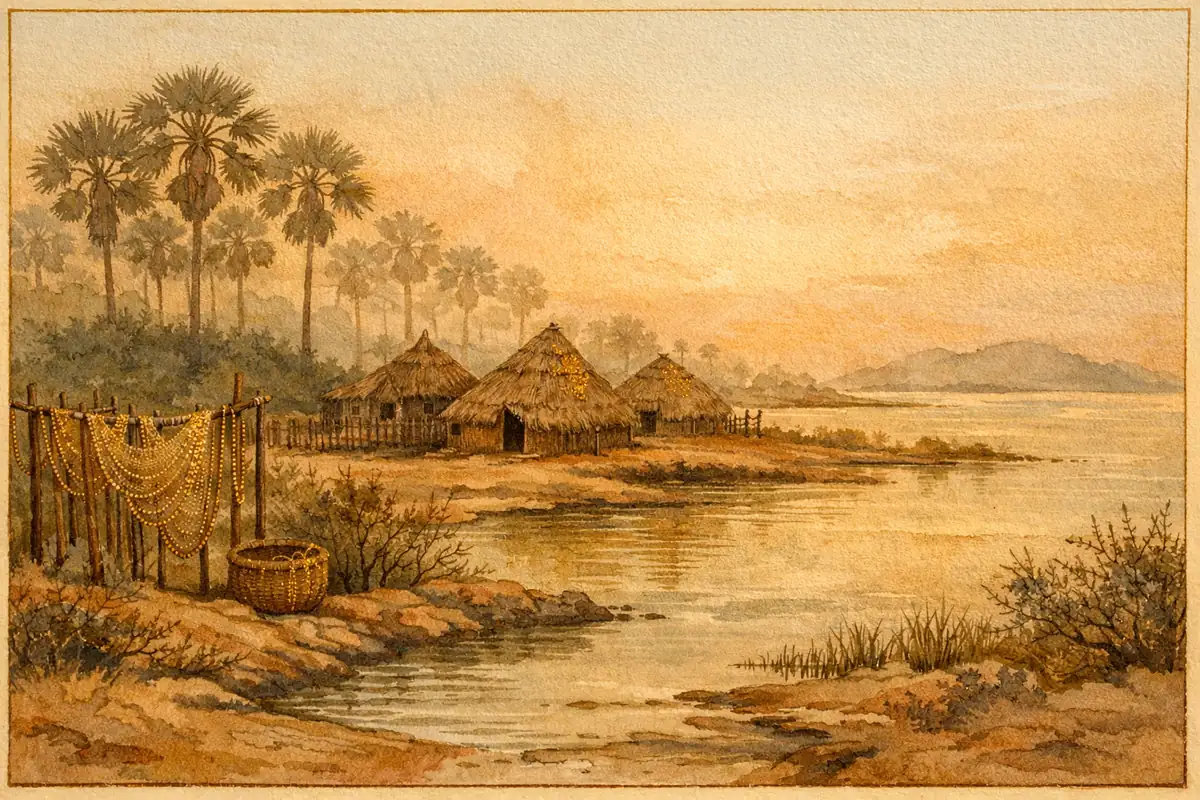
The Yanadi are a people of the coastal plains of southern Andhra Pradesh, above all of the old Nellore district, the island of Sriharikota and the shores of Pulicat lake. They speak Telugu. Thurston's sources describe them as fishers, hunters and gatherers, makers of fire by friction, village watchmen and servants, and cooks in the households of landholders, and as having many divisions by place and work. Their exogamous lines are known by house names. They are a Scheduled Tribe in Andhra Pradesh and Telangana.
Clans and Kinship
Thurston records that Yanadi families were known by house names, each an exogamous sept, and lists those of Manchi and Challa Yanadi families of Nellore, Sriharikota, Tada and Kambakam; many of the names came from villages, or from people of other communities on whose land the families lived. The Reddi, Manchi, Challa and Adavi Yanadis and other divisions, set apart by place, work and diet, did not all intermarry. Each settlement (guddem) of about twenty huts had a headman, the Kulampedda or Pedda Yanadi, who settled disputes alone or with a council.
What “House name” means
Thurston calls the exogamous septs of the Yanadi house names; in his day only the old remembered them.
20 house names
- Bandi
Manchi Yanadi
Cart.
- Chembetti
Manchi Yanadi
Hammer.
- Chilakala
Manchi Yanadi
Parakeet.
- Dhoddi
Manchi Yanadi
Sheepfold.
- Igala
Manchi Yanadi
House-fly.
- Enthodu
Manchi Yanadi
A village.
- Kanur
Manchi Yanadi
A village.
- Kotlu
Manchi Yanadi
Cowshed.
- Mekala
Manchi Yanadi
Goat.
- Manikala
Manchi Yanadi
A measure.
- Pamula
Manchi Yanadi
Snake.
- Udamala
Manchi Yanadi
Water-lizard.
- Jandayi
Manchi Yanadi
Flag.
- Marrigunta
Manchi Yanadi
Pond near a fig tree.
- Tenkayala
Manchi Yanadi
Coconut.
- Totla
Manchi Yanadi
Garden.
- Tupakala
Manchi Yanadi
Gun.
- Nerigi Mekala
Challa Yanadi
A kind of goat.
- Elugu
Challa Yanadi
Bear.
- Thirlasetti
Challa Yanadi
From the name of a Balija Chetti.
House names from Thurston's lists (vol. 7, 1909, 'Yanadi'), Manchi Yanadi first, then Challa Yanadi, with his glosses; two names that are unclear in the scanned text are left out. Thurston notes that the names were known only to the old and that many were probably adopted from villages or landlords in place of older ones.
In the Official Lists
Scheduled Tribe
Andhra Pradesh, Telangana
Listed as: Yenadis
The Census 2011 entry for undivided Andhra Pradesh reads 'Yenadis, Chella Yenadi, Kappala Yenadi, Manchi Yenadi, Reddi Yenadi'.
Census 2011 counted the Yanadi of undivided Andhra Pradesh, which then included Telangana, together. Checked against the census table and Wikipedia's compilation of the order. The Yanadi are not a PVTG.
Checked on 2026-11-07 against the sources below. The lists are amended from time to time and can differ by district; for a certificate, the current order or the state's list is what counts.
Name and Origin
Thurston (1909) gives several derivations of the name and prefers the Sanskrit anadi, 'those whose origin cannot be traced'. Some Yanadis said they were the first people of the country round Pulicat lake, where they hunted and fished freely until the Reddis made them work for them; others said that the Reddi or Manchi Yanadis were once Chenchus who fled from the western hills. A Mackenzie manuscript, quoted by Thurston, tells of sixty families brought to Sriharikota by one Raghava, and of a sage from Benares, Ambikesvara, who taught them charms against a great serpent.
History
The island of Sriharikota in Nellore district was the main home of the Yanadis in Thurston's day, and the tribe had long been led by a hereditary headman there. When the island came into the government's hands in 1835, the authorities supplied grain, clothing and money in return for the forest produce the Yanadis collected; a school teaching Telugu, with lessons in basket-making and the growing of chay-root for red dye, ran from 1858 to 1877 (Thurston). The census of 1891 counted about 85,000 Yanadis and recorded 89 sub-divisions.
Faith and Worship
Thurston records that each Yanadi centre had a house of the gods (devara indlu) rather than a temple. Chenchu Devudu was always the household god, a village goddess such as Poleramma or Ankamma watched over the locality, and gods of wider fame such as Subbarayudu, Venkateswara and Narasimha were also worshipped. The Yanadis are their own priests; Chenchu Devudu takes no animal offerings, while the goddess does. Some Yanadis are Christian.
Deities named in the sources: Chenchu Devudu, Poleramma, Ankamma
Customs
In Thurston's day the Reddi Yanadis always held a wedding ceremony while others often did without; marriage was usually after maturity, and the flower of the tangedu shrub (Cassia auriculata) once served as the tali, later replaced by a turmeric-dyed thread. Houses were low conical huts of bamboo and palmyra leaf or grass with a small entrance. The Yanadis knew the forest plants and birds well, and made fire by twirling one stick in a hollow cut in another.
Related communities
Sources
- E. Thurston and K. Rangachari, Castes and Tribes of Southern India, vol. 7 (1909), 'Yanadi'. Vol. 7, 'Yanadi', from p. 416
- Constitution (Scheduled Tribes) Order, 1950, and the companion orders, as amended: Parts for Andhra Pradesh, Telangana (as compiled in Wikipedia's List of Scheduled Tribes)
- Census of India 2011, Table A-11: State Primary Census Abstract for individual Scheduled Tribes, Andhra Pradesh. censusindia.gov.in NADA catalog 42967 (Andhra Pradesh)
Practice differs by village and family. If something here does not match your family's tradition, trust your elders.