
Paroja
At a glance
- Clan word
- Clan
- Descent
- Not recorded in the sources used
- Lives in
- Odisha, Andhra Pradesh, Telangana, Chhattisgarh, Maharashtra, Madhya Pradesh
- Languages
- Parji (Dravidian), Desia (Indo-European (Indo-Aryan))
- Population
- 4,12,794 Census 2011, Table A-11, Paroja entries added together: Odisha 374,628; Andhra Pradesh (undivided, 'Porja, Parangiperja') 36,502; Chhattisgarh 1,212; Maharashtra 315; Madhya Pradesh 137.
- Region
- East
About
The Paroja, also written Parja and Poroja, live in the hills and valleys of southern Odisha, most of them in Koraput, with others in Nabarangpur, Malkangiri, Kalahandi and Rayagada, and across the border in Andhra Pradesh. Their language, Parji, is Dravidian and close to Gondi, though most in Koraput now speak Desia. They are divided into the Bada and Sana Paroja and several sections, each with exogamous totemic clans. They are a Scheduled Tribe in Odisha, Andhra Pradesh, Telangana, Chhattisgarh, Madhya Pradesh and Maharashtra; the 2011 census counted 412,794.
Clans and Kinship
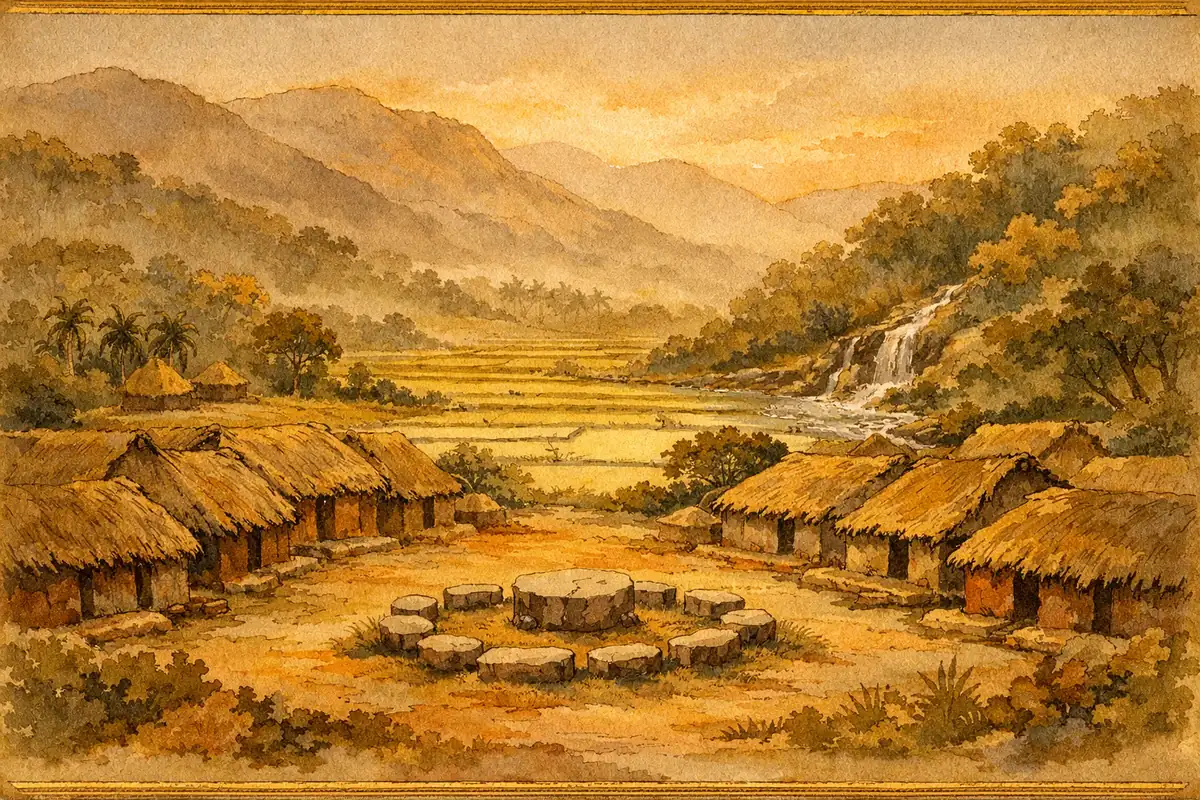
SCSTRTI (2013) divides the Paroja into two broad sections, the Bada Paroja, with the Sodia, Jhodia, Bada Jhodia and Penga, and the Sana Paroja, with the Konda or Bareng Jhodia and the Selia or Chhelia; the Bada Paroja follow more Hindu customs and do not eat beef. Each section is divided into many totemic exogamous septs named after villages, hills, plants and animals, whose totems are revered. Settlements are each of one clan, so marriage outside the village is the rule, and cross-cousin marriage is preferred; Thurston (1909) adds that in the Barang Jhodia, Pengu and Kondhi divisions a man may marry his father's sister's daughter but cannot claim her as of right. Each village has a muduli (secular head), a jani (priest) and a challan (messenger), with the disari, gurumai, gunia and bhatanaik as ritual specialists. The berna munda, a ring of stone slabs in the village centre, is where the headman and elders sit.
What “Clan” means
SCSTRTI (2013) calls the Paroja exogamous divisions septs or clans and gives no Paroja word for them; many are named after villages or hills, others after plants and animals revered as totems.
59 clans
- Angaria
- Atimundia
- Bageria
Totem: tiger
- Baria
Totem: wild boar
- Bedia
- Chahaderia
- Chahia
Totem: champak tree
- Chalia
- Chemia
- Chikamia
- Chhembia
- Chindria
- Dabia
Totem: piri grass
- Dindia
Totem: a bird's egg
- Hachodia
- Hadria
- Halkeria
- Handia
- Haranginia
- Jiria
- Kadengia
- Kanwakharia
- Kutesia
- Narkia
- Gadadia
Totem: banana tree
- Ganuria
- Girilia
Totem: the girli tree
- Hukesia
- Jamudia
Totem: jamun tree
- Kaledia
- Kaleria
- Kaletia
Totem: a snake
- Kartaria
- Katedia
- Katia
- Kharlia
- Kochia
Totem: a kind of eel
- Kodikharia
- Kodinga
- Kodiparia
Totem: a hill
- Kucheria
- Kuhuria
- Kundaria
- Lauria
- Lulia
- Maribtia
- Marlia
- Murkharia
- Nangeria
- Nerkeria
- Ornagaria
- Rengia
- Sanderia
- Sodia
- Tarighatia
- Titosia
- Tuadia
- Tualaria
- Tumudia
The septs SCSTRTI's handbook (2013) lists for the Paroja, in its order, with the totems it gives; its 'etc.' shows the list is not complete. Thurston (1909) recorded the vulture (gidda), tiger (bagh) and cobra (nag) as totems among the Barang Jhodia, and the cow among the Bonda Poroja.
In the Official Lists
Scheduled Tribe
Odisha, Andhra Pradesh, Telangana, Chhattisgarh, Madhya Pradesh, Maharashtra
Listed as: Paroja
Odisha: 'Paroja' (census table: 'Paroja, Parja, Bodo Paroja, Barong Jhodia Paroja, Chhelia Paroja, Jhodia Paroja, Konda Paroja, Paraja, Ponga Paroja, Sodia Paroja, Sano Paroja, Solia Paroja'); Andhra Pradesh and Telangana: 'Porja, Parangiperja'; Chhattisgarh, Madhya Pradesh and Maharashtra: 'Parja'.
Checked against the 2011 census table of each state and Wikipedia's compilation of the order; amendments after 2011 were not checked. The Andhra Pradesh table covers the state before Telangana was formed in 2014. Odisha's separate entries 'Bondo Poraja' and 'Didayi, Didai Paroja, Didai' are other peoples and are not counted here. The PVTG list reproduced from the 2019 PIB release names the Khond Porja and Parengi Porja (and the Bondo Porja) for Andhra Pradesh and Telangana.
Checked on 2026-11-07 against the sources below. The lists are amended from time to time and can differ by district; for a certificate, the current order or the state's list is what counts.
Name and Origin
The name is the Odia praja or paraja, subjects or tenants, the ordinary people as against the rajas (SCSTRTI 2013; Thurston 1909, quoting the Madras census of 1871). A tradition that Thurston found throughout the tribe says that rajas and parjas were once brothers, but the rajas took to riding horses and the parjas became carriers of burdens; SCSTRTI records the same story. SCSTRTI also records that the Paroja give their original name as Bastaria, because they came from Bastar, though they regard Odisha as their homeland.
History
The Madras census of 1871, quoted by Thurston (1909), recorded that later settlers acknowledged the Parjas' ancient rights to their land, the Parja bhumi, and that when a boundary was disputed a Parja was called in to point out the old landmarks. Thurston also gives a tradition that, when the rajas of Jeypore rose to power at Nandapur, the tribes of the country gave up their rights to the soil in return for protection. Hayavadana Rao, writing for Thurston, listed seven sections: Barang Jhodia, Pengu, Khondi, Parengi, Bonda, Tagara and Dur or Didayi Poroja. The Bonda and the Didayi now have their own entries in Odisha's list.
Faith and Worship
SCSTRTI (2013) records Patrabuda as the supreme deity, with his consort Jakar, the earth goddess, kept under trees at the edge of the village and honoured as the deity of farming. The village deity, Nissan Munda, is seated in the centre of the village street and worshipped by the jani at every festival to protect the village. Deities of the hills, forests and streams, such as Dongar Devta, Janikudi and Khandual, are also propitiated.
Deities named in the sources: Patrabuda, Jakar
Customs
Unmarried young men and women sleep in separate dormitories, the dhangada and dhangadi basa (Thurston 1909). Marriage by negotiation is costly, so some marry by capture (jhinka utra) or elopement (udlia); levirate and sororate occur. Either party may seek divorce before the community council, and the one who leaves gives the other a copper coin or a pebble. Paroja dances are the dhemsa and dungdunga, and their songs are called laga (SCSTRTI 2013).
Festivals
Bihan Thapa
Vaishakha (April-May)
Seed-sowing ceremony (SCSTRTI).
Asadhi Parab
Ashadha (June-July)
A rite to protect the cattle from disease (SCSTRTI).
Langala Dhua
Shravana (July-August)
Ploughs and other farm tools are washed and consecrated (SCSTRTI).
Nuakhia
Bhadra (August-September)
First eating of the new rice (SCSTRTI).
Chaita Parab
Chaitra (March-April)
The year's ceremonial hunt (SCSTRTI).
Related communities
Sources
- E. Thurston and K. Rangachari, Castes and Tribes of Southern India, vol. VI (Madras, 1909). s.v. Poroja, pp. 207-216
- SCSTRTI Odisha, Paroja (photo handbook, Bhubaneswar, 2013), from the Ministry of Tribal Affairs repository. Foreword; settlement; social organisation and septs; magico-religious life
- SCSTRTI Odisha, tribe profile: Paroja. Scheduled Castes and Scheduled Tribes Research and Training Institute, Bhubaneswar; read 7 November 2026
- Census of India 2011, Table A-11: State Primary Census Abstract for individual Scheduled Tribes (one table for each state). Odisha (catalog 42960); Andhra Pradesh (catalog 42967); Chhattisgarh (catalog 42961); Madhya Pradesh (catalog 42962); Maharashtra (catalog 42966)
- Constitution (Scheduled Tribes) Order, 1950, as amended, Parts for Odisha, Andhra Pradesh, Telangana, Chhattisgarh, Madhya Pradesh and Maharashtra, as compiled in Wikipedia's List of Scheduled Tribes from the Census of India list of notified Scheduled Tribes
- Particularly vulnerable tribal group, Wikipedia (pointer only: the PVTG list from the PIB release 'Welfare of particularly vulnerable Tribal groups', 2019)
Practice differs by village and family. If something here does not match your family's tradition, trust your elders.